
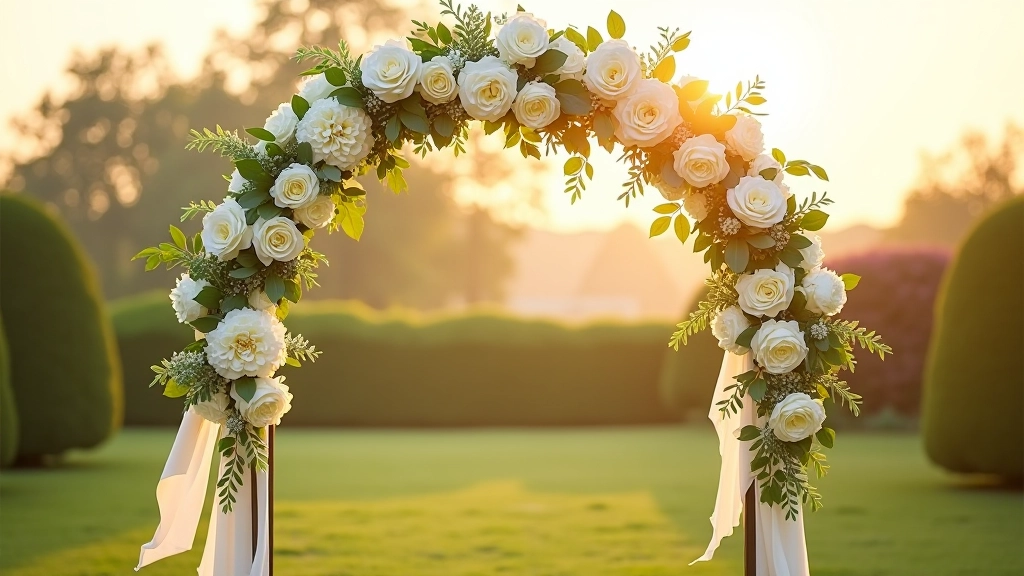
Designing Your Ceremony Floral Arch
Explore arch styles, flower arrangements, and installation tips. From romantic roses to modern minimalist designs.
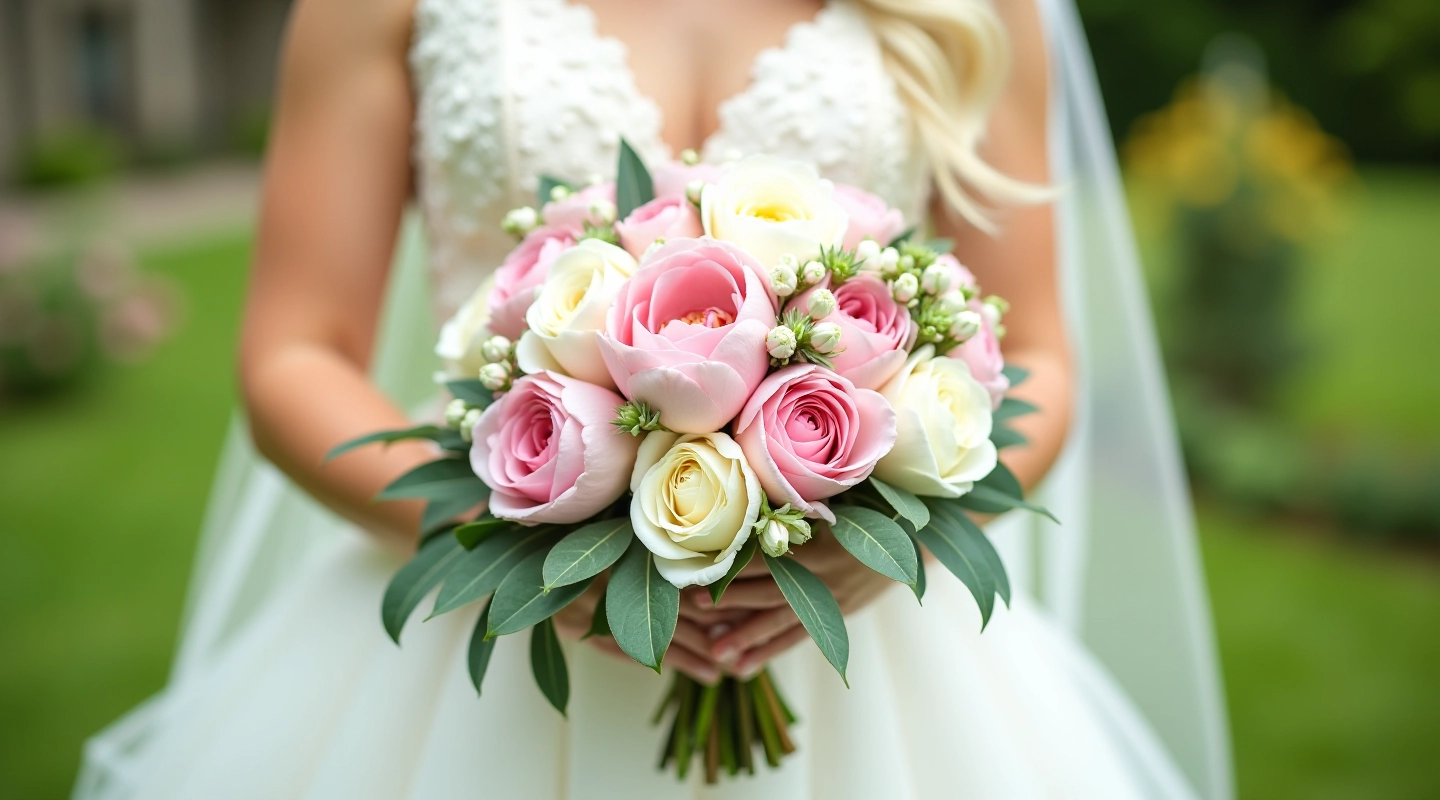
Your bouquet is more than just flowers — it's the final piece of your wedding day look. We'll walk you through finding a style that matches your dress, venue, and personality.
When you're planning your wedding, there's a lot to think about. But here's the thing — your bouquet can actually tie everything together. It doesn't need to match your dress exactly, but it should feel like it belongs with your overall look.
There are really three main bouquet shapes you'll see at weddings. Each one works differently depending on your dress style and venue. Some shapes look great with flowing gowns, while others pair better with sleeker silhouettes. Plus, the shape affects how you'll hold it and photograph it, so it matters more than you'd think.
The good news? You don't need to choose blindly. Understanding these shapes — and what actually works with your specific dress — makes the whole process easier.
Note: This guide is informational. Floral availability, pricing, and delivery vary by season and location. Always confirm details with your florist, especially regarding budget, timeline, and any special requests. Every wedding is unique — what works for one couple may not suit another.
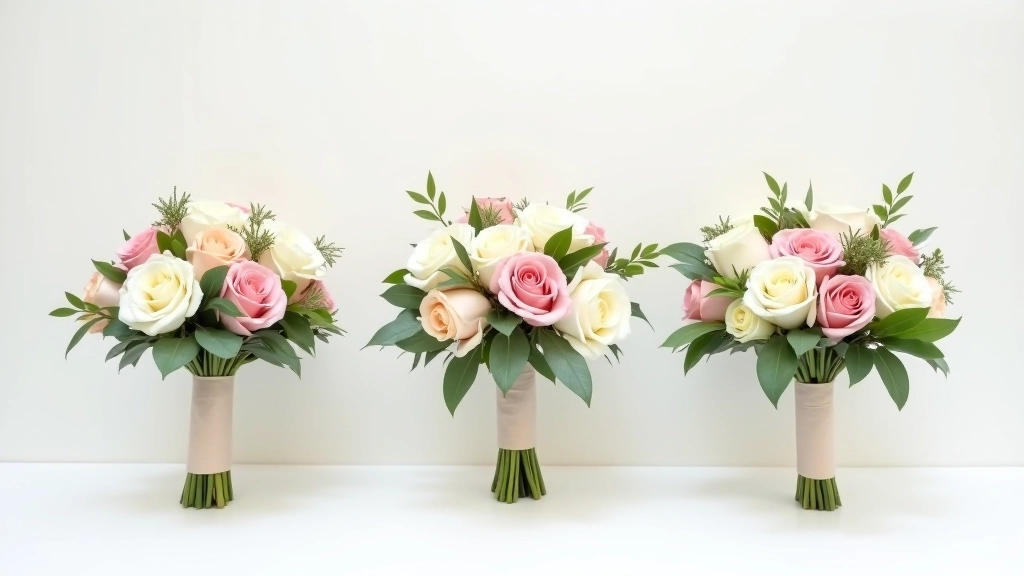
Round bouquets are the classic choice. They're compact, full, and work with almost any dress. You'll see them at traditional weddings and modern ones alike. The shape sits nicely in your hands and photographs well from the front. If you're wearing a ball gown or an A-line dress, this shape feels balanced.
Cascading bouquets flow downward and create dramatic lines. They work brilliantly with sleek wedding dresses — the long lines of the bouquet complement the dress silhouette. But here's what people sometimes don't realize: they're heavier than they look, and you'll need to account for the length in your photos and when you're walking down the aisle.
Arm bouquets (or linear bouquets) are modern and graphic. They're held along your arm rather than cupped in your hands. These suit contemporary dresses and minimalist aesthetics perfectly. They're lighter to carry and create an interesting visual line in photos.
Your dress is the anchor point. The bouquet should complement it, not compete with it. That's the key principle. If your dress is heavily textured or ornate, you don't need an equally busy bouquet. Sometimes simplicity works better.
Consider the neckline and sleeve style. A strapless dress with a round bouquet creates a clean, balanced look. A sleeved dress can carry something more architectural. The fullness of your skirt matters too — a full skirt can handle a larger bouquet, while a sheath dress needs something more proportionate.
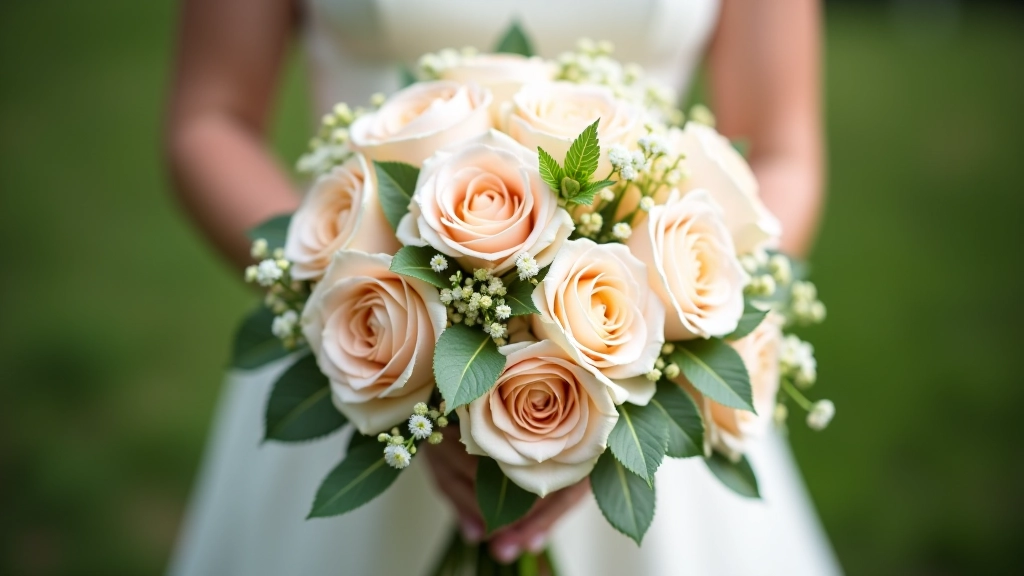
Color is where people get creative. White and cream are safe choices, but they're not the only options. Blush, ivory, soft pink, even sage green — these all work. The rule isn't about matching exactly. It's about creating harmony. Your bouquet should feel like it belongs in your hands, not like it was borrowed from someone else's wedding.
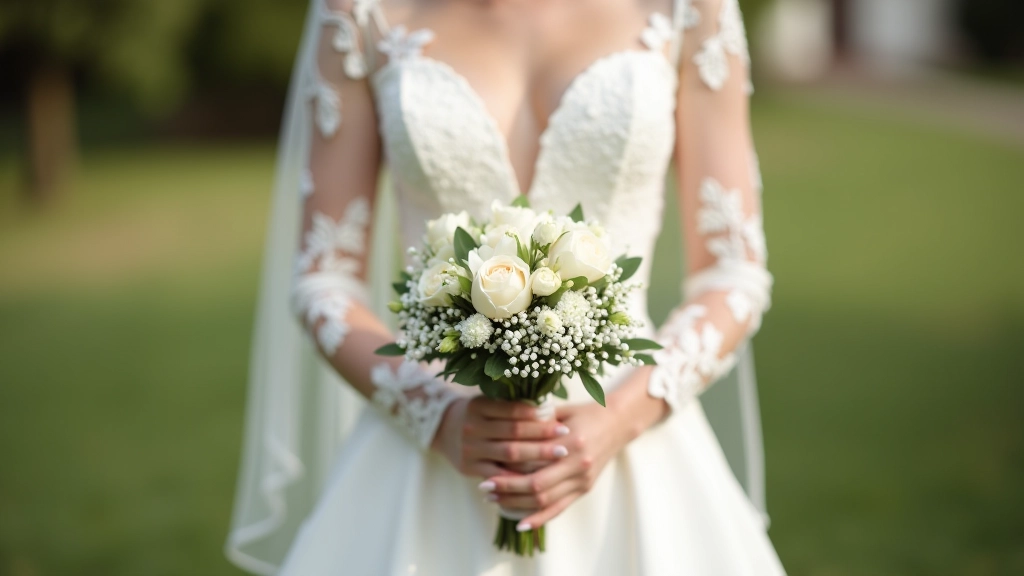
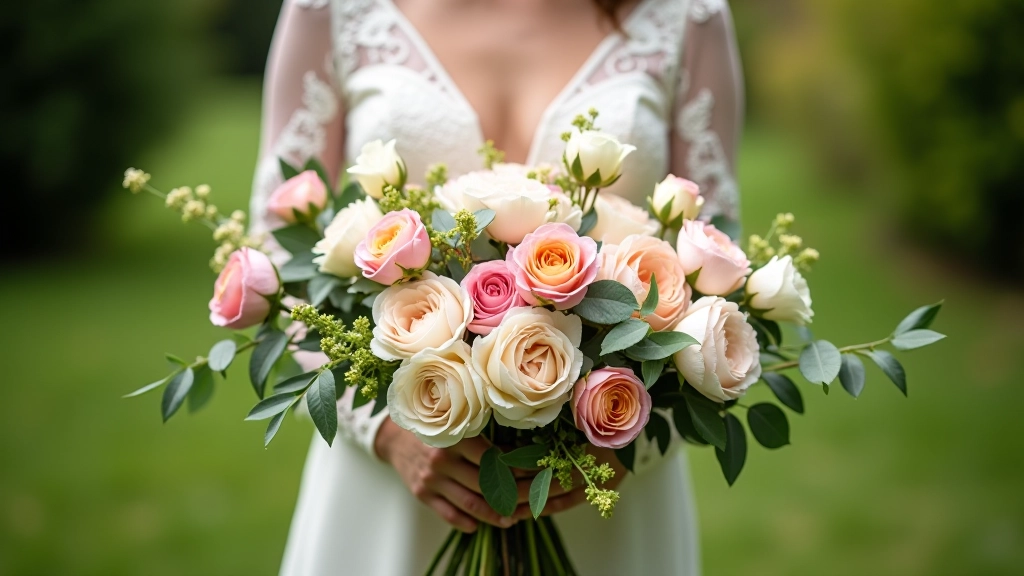
Not every flower is available year-round. Peonies are gorgeous but they're only available in late spring and early summer. If you're getting married in September and your heart's set on peonies, you'll either need to budget for imports or choose a different flower. Being flexible saves stress.
Garden roses, dahlias, and ranunculus are workhorses. They're available most of the year and come in tons of colors. Eucalyptus, Italian ruscus, and olive foliage add texture and movement without being too busy. Mix a few key flowers with supporting greenery — that's the formula most florists use.
Ask your florist what's in season for your wedding date. They'll have the best options, and seasonal flowers cost less than imported ones. You'll also get fresher blooms, which means your bouquet stays beautiful through your entire day.
A bouquet needs to feel proportionate to your frame and your dress. Too small and it gets lost in photos. Too large and you're struggling to hold it. The standard wedding bouquet weighs somewhere between 2 and 4 pounds. That's not heavy, but it's something to consider if you're planning to hold it for hours.
If you're on the smaller side, a 7 to 8-inch bouquet diameter usually works. If you're taller or wearing a large dress, 8 to 10 inches feels better balanced. But these are guidelines, not rules. The best test is actually holding one in your florist's studio. You'll feel immediately whether it's right for you.
Cascading bouquets add visual length but also weight. The trailing flowers add maybe another pound or two. If weight is a concern — whether you've got an injury, arthritis, or you're just tired of holding things — go with a round bouquet instead. No one notices or cares about that choice except you.
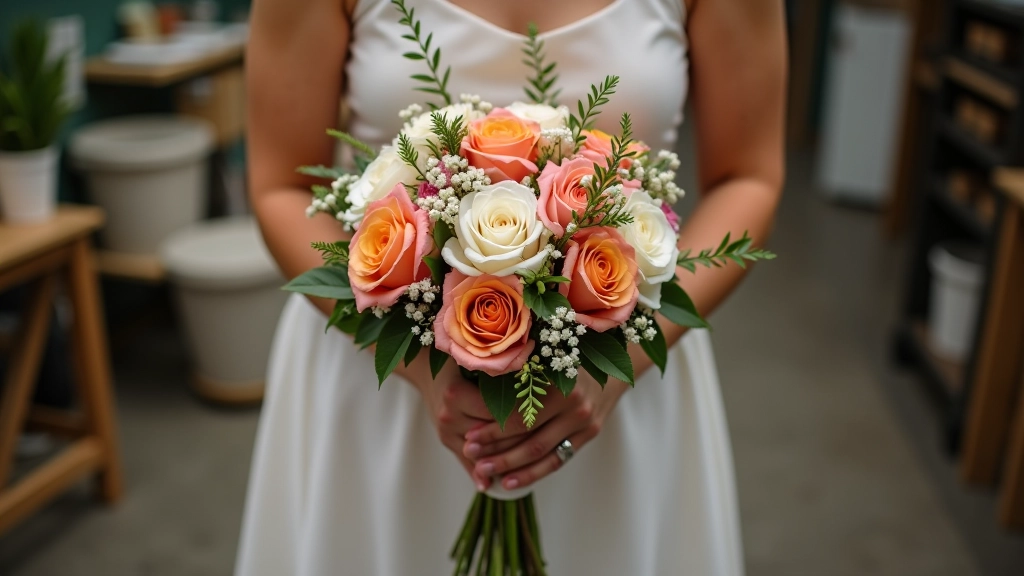
Your bouquet is personal. It's something you'll hold, feel, and see in every photo. The shape should work with your dress. The flowers should be available in your season. The size should feel right in your hands. That's really it.
Talk to your florist early. Bring photos of bouquets you like. Be clear about your budget and any flowers you absolutely want or want to avoid. A good florist will ask questions about your dress, your venue, your vision. They'll suggest options you might not have considered. And they'll create something that's genuinely yours — not just a generic wedding bouquet.
Your bouquet is one detail, but it's an important one. Take the time to get it right. You'll be grateful when you're looking at your wedding photos years from now.
Explore arch styles, flower arrangements, and installation tips. From romantic roses to modern minimalist designs.
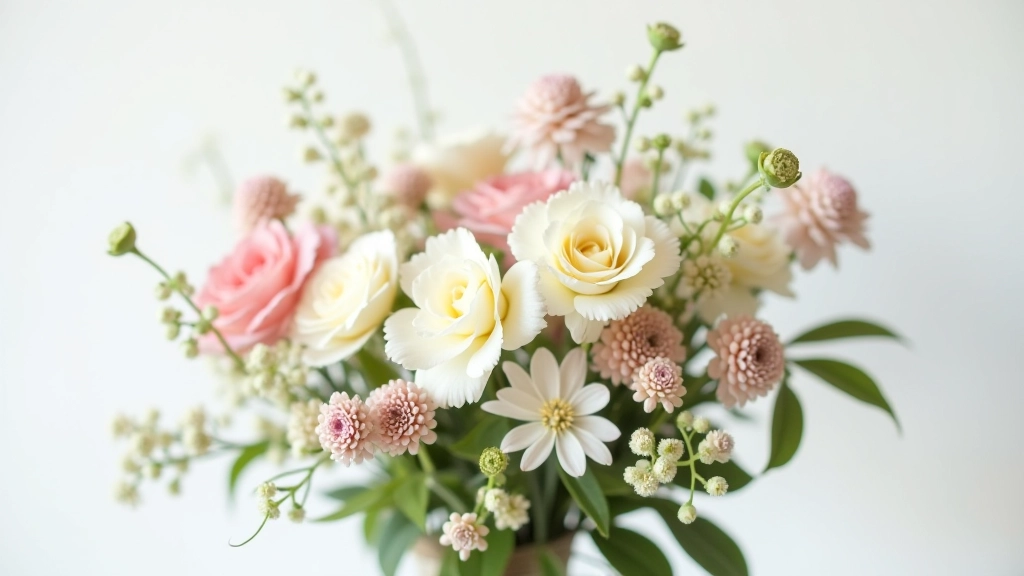
What's actually available in Ireland each season and how it affects your floral design budget and availability.

Key conversations you should have with your florist before booking. Coverage, timeline, revisions, and backup plans.